
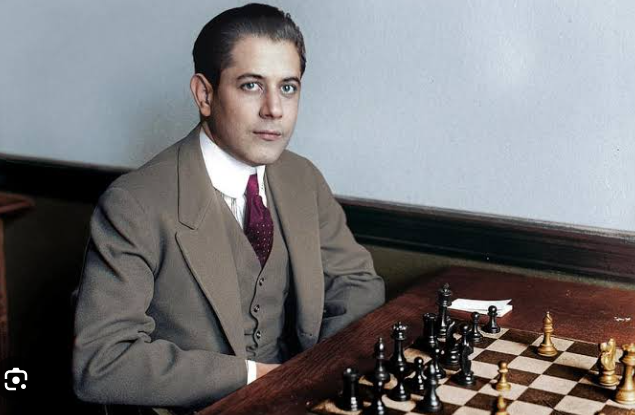
José Raúl Capablanca (1888–1942) was a Cuban chess grandmaster renowned for his natural talent and undefeated streak in world chess competitions. Often called “The Chess Machine” due to his intuitive understanding of the game, Capablanca dominated the chess world in the early 20th century. His style was marked by clarity and simplicity, yet he could dismantle opponents with ease, making him one of the greatest chess players in history.
Capablanca first gained international recognition in 1909 when he defeated American champion Frank Marshall. However, his most significant achievement came in 1921 when he won the World Chess Championship by defeating Emanuel Lasker. Capablanca held the title until 1927, when he lost to Alexander Alekhine in a closely fought match. Despite losing the title, Capablanca continued to compete at the highest level, maintaining a legacy as one of the greatest players of his era.
What set Capablanca apart from his peers was his intuitive grasp of endgames and his ability to simplify complex positions. His games often seemed effortless, with smooth transitions from opening to middle game to endgame. This mastery earned him admiration not just from fans but also from fellow grandmasters, many of whom studied his techniques to improve their own game.
Capablanca’s contributions to chess theory, particularly in endgame strategy, continue to influence players today. If you’re interested in exploring more about Capablanca’s strategies and famous games, resources like Forky Chess provide an in-depth look into his style and influence on modern chess.
Capablanca’s legacy is enduring, and his impact on the chess world remains profound. His games are still studied by enthusiasts and professionals alike, offering lessons in precision, clarity, and control.