
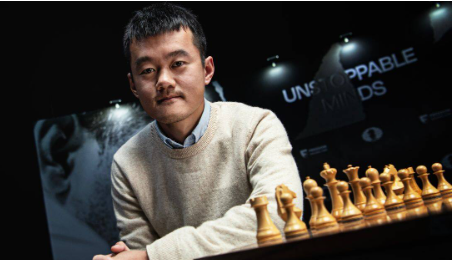
Early Life and Background
Ding Liren was born on October 24, 1992, in Wenzhou, Zhejiang, China. He began playing chess at the age of four, showing early signs of his prodigious talent. Encouraged by his parents, Ding pursued chess with dedication, quickly rising through the ranks of Chinese junior chess.
Chess Career Highlights
Junior Achievements:
- 2003: Ding won the Chinese under-10 championship, marking his entry into competitive chess.
- 2009: At the age of 16, he became the youngest Chinese National Champion, a title he would win multiple times.
Professional Milestones:
- 2015: Ding became the first Chinese player to break into the top 10 of the FIDE world rankings.
- 2017: He was a finalist in the FIDE World Cup, demonstrating his strength in knockout format tournaments.
- 2018: Ding set a record for the longest unbeaten streak in top-level chess, which further solidified his status as one of the world’s top players.
- 2019: He won the Grand Chess Tour’s Sinquefield Cup, sharing the victory with Magnus Carlsen after an intense tiebreak.
- 2023: Ding won the Candidates Tournament, earning the right to challenge for the World Chess Championship. He went on to defeat Ian Nepomniachtchi, becoming the first Chinese World Chess Champion.
Playing Style
Ding Liren is celebrated for his deep strategic understanding and endgame prowess. He excels in positional play, often seeking to gradually outmaneuver his opponents through subtle, long-term plans. Ding’s ability to remain calm under pressure and his exceptional endgame skills make him particularly dangerous in slower time controls. He is also known for his precise calculation and resourcefulness in complex positions.
Personal Life and Interests
Outside of chess, Ding Liren is known for his modest and introspective personality. He enjoys reading and has a particular interest in classical literature. Ding’s quiet demeanor off the board contrasts with his intense focus and determination during competition.
Contributions and Legacy
Ding Liren’s impact on chess, particularly in China, is profound. As the first Chinese player to become World Champion, he has inspired a new generation of chess players in his country. Ding’s success has helped elevate the status of Chinese chess on the global stage. He is also respected for his sportsmanship and humility, qualities that have endeared him to fans worldwide.
Conclusion
Ding Liren’s journey from a young chess prodigy in Wenzhou to the World Chess Champion is a testament to his extraordinary talent and dedication. His deep strategic understanding, coupled with his exceptional endgame prowess, makes him one of the most respected and formidable players in contemporary chess. As he continues to compete at the highest levels, Ding Liren’s legacy is assured, inspiring chess enthusiasts and players around the world.